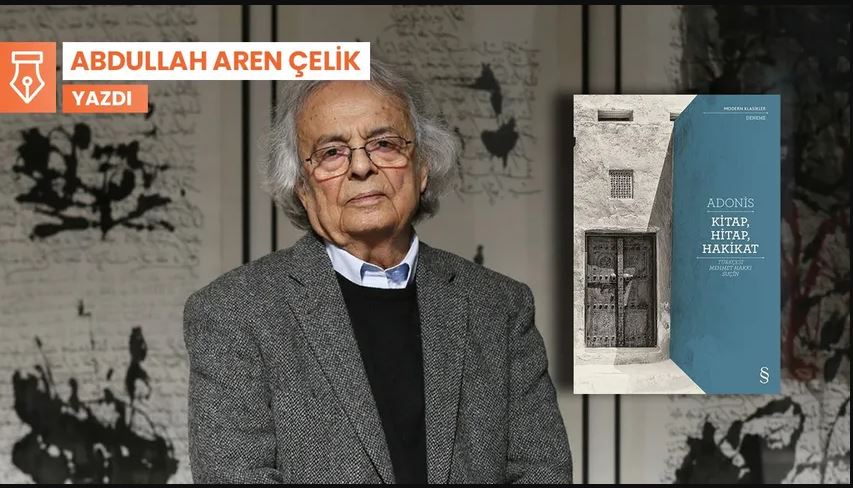
By Abdullah Aren Çelik
Daryush Shayegan, in his book ‘Wounded Consciousness’, makes the following observation about the Easterners: “We, the children of Asian and African civilizations, have been on ‘holiday’ in history for three hundred years.”(1)
Shayegan does not say this word for nothing. As a matter of fact, the geographical name of the “Eastern” society he refers to was given by the Roman Empire, which built the civilization. Being able to determine the place and direction means having the power to put himself in the center and shape the world according to where he is. Mehmet Ali Kılıçbay makes a determination on the issue of East-West in the article he wrote in the second issue of Doğu-Batı magazine with the title of Fakir Relatives’ fortune. In the article in question, he says that two of the civilized societies have a side that determines the direction besides a geographical naming. “Civilization is, among other things, geography. But of all civilizations, only two bear a directional sign besides geographical names: East and West. Almost all of the other civilizations have geographical names, but none of them have a defining element, name or adjective. On the other hand, these directional names have also become geographical names. This exceptional and exceptional situation, which requires explanation as well as it is exceptional, brings a perverse question to one’s mind, ‘Is it two sections of the same civilization?'(2)
Kılıçbay is not wrong about the “heretic” question that haunts his mind. Because there can only be one reason why a place on earth named itself in a way that determines the direction and not by its geographical name, and that is because it sees itself as the center of civilization. With this approach, Kılıçbay seems to give an answer to Shayegan’s backwardness of the Easterners.
The reasons can be multiplied, of course. The subject of “vacation” that Shayegan refers to may have an irony in it, but we understand from his words that his own society cannot produce ideas. Today, we know that many philosophers, thinkers, poets and writers like Shayegan are thinking about this issue.
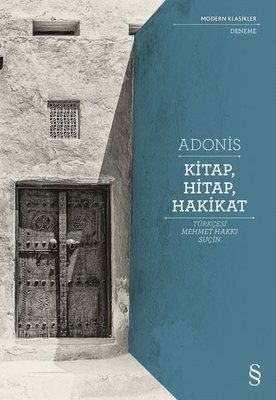
Adonis is one of those who criticize what Shayegan refers to as “East”. In his essay ‘Book, Address, Truth’ he revises what Shayegan calls the East as an Arab-Islamic geography, and looks at the issue of being “on vacation” in history from the inside and discusses the problem with its reasons.
“From a religious point of view, the religious text is the place and house of truth. If this point of view will be limited only to religious truth, believers and religious texts, I have no objection to it. But if the religious text is to become a criterion for looking at non-religious texts, if the truth of religion is to be the touchstone of all other truths, or if non-believers are to be imposed on a cultural, social, and political institution and demanded not to think about non-religious truths, here is my objection. This is the biggest problem that dominates Arab-Islamic culture. In Arab-Islamic culture, a religious text is a cultural, social and political text at the same time. (3)
In the same book, Adonis attributes the lack of development of the East, that is, the Arab-Islamic geography, to the inability to establish a healthy relationship between religion and the state. While explaining the reasons for the backwardness of the society, he focuses on the reasons for the opening of the gap between the East and the West in terms of development. As a result, he says that Westerners keep religion in an area where their borders are determined. According to him, religion’s taking place in every particle of the social structure and even acting as a mud is objectionable and an obstacle to the development of the society. On the other hand, Adonis both directs his criticism and tries to expose the myth of salvation to these societies. While trying to approach the faltering side of the East with its reasons, on the other hand, he develops opposing ideas. While doing this, he does not approach with an anti-religious secularism, but develops a thought that accepts religion but draws its boundaries.
The following words he wrote in his essay “Innovation in Islam” are also his own: “The right to be religious or not to be religious implicitly includes the right to freedom. The point, then, is not to abolish religion itself, but to create a civil society in which people, believers or not, are politically, culturally and institutionally equal.”(4)
Adonis describes the destructiveness of the response of the state power, which holds religion in its hands in the Arab-Islamic geography and uses it as a means of pressure on society; moreover, while doing this, he speaks as a poet. He points out that while the social structure is being built, religion is the material of politics, and the influence of the state on society through religion increases. Therefore, he positions his poetry against this wrong idea and turns it into a means of reckoning.
“Pictures have detached organs on the body of air:
They are the children of Lebanon
They embellish the earth’s book and retouch the horizon.”(5)
Adonis, şüphesiz “yeryüzünün kitabı” derken kutsal kitaplardan bahsetmiyordur. Bu açıdan bakınca dini içtihadı elinde tutan devletlerin neden şairleri, yazarları ve düşünürleri öldürttüğünü anlıyoruz. Bu ölümler sonucunda koca bir Doğu toplumuna ne mi oldu? Şöyle yanıtlıyor Adonis: “Dinin ruhsal ve düşünsel dünyası o derece fakirleşti ki dini salt fıkha dönüştürenler her yaratıcılığı bidat ve özgürce ifade edilen her düşünceyi de küfür gördüler. Böylece İslam’ın siyasi tarihi, Müslümanlar arasında sürüp giden siyasi ve dini çatışmaların tarihine dönüştü.”(6)
Adonis, of course, is not talking about the holy books when he says “the book of the earth”. From this point of view, we understand why states that hold religious jurisprudence have poets, writers and thinkers killed. What happened to a whole Eastern society as a result of these deaths? Adonis answers: “The spiritual and intellectual world of religion has become so impoverished that those who have converted religion into pure fiqh regarded every creativity as bidat and every freely expressed thought as blasphemy. Thus, the political history of Islam became a history of ongoing political and religious conflicts among Muslims.
These words of Adonis seem to support Shayegan.
There was a meeting of civilizations that was discussed and talked about a lot recently, although it was talked about as a “meeting of civilizations”, the main axis of the discussion was Samuel Huntington’s theory of ‘Clash of Civilizations'(7). The book discussed the conflict culture of East and West, Islam and Christianity, North and South and other geographies. The main idea of the book was whether there would be a meeting of civilizations, even though they were conflict theses. After these discussions, a concept was derived: “Tolerance”
The purpose of the discussions was to explain how “tolerant” religions are and to spread the idea that the problem is not religions and societies. However, contrary to what is thought, look how Adonis approaches the issue of tolerance:
“It may be true that tolerance alleviates exclusion, marginalization and oppression in certain conditions and societies, but it does not change the fundamentals. It does not liberate, but suggests that it means less repression of slavery. Tolerance here is based on benevolence, not human. It is nothing more than a drug that paralyzes the dynamism of society, stops its progress, and curbs building a humane society united in humanity and rights without any discrimination. To speak of tolerance, in this case, often means trying to protect the differences between minorities by disguising them with a whitewash of social hypocrisy. In other words, what one has to destroy and overcome becomes even more riveted. In short, tolerance is a veil that covers equality and needs to be torn.”(8)
In other words, to say that Islam or other religions is a religion of tolerance indicates a kind of inequality between the powerful and the oppressed. In other words, someone is considered tolerant because he makes himself the subject of the relationship and does not kill or oppress the oppressed, and gives him the right to live within the limits he desires. However, equality is needed rather than tolerance. Adonis’ objection to tolerance also comes to life here. Therefore, the existence of justice based on equality, not tolerance, can help social change and development. What needs to be done for this is to ensure that religion is drawn to an area where it can live freely and where it will not limit the life of others. According to him, there is no such thing as a religion of tolerance, there are religions with clear boundaries and social dynamics organized on the basis of equality.
Adonis is not a political scientist, but his words may sound like it. This is because the Eastern society’s affinity with poetry before the holy book changed with the revelation of the Qur’an. The eastern state power had the poets killed because they were running polytheists to Islam; According to Adonis, the downfall begins with the killing of the poets. It is not unfair either, because the new order’s view of poetry and poet gives a clue as to where social change will evolve. He writes in ‘Book, Address, Truth’: “Islam does not abolish poetry, but subordinates it to its own order by changing the concept of poetry and its role. Poetry is no longer ‘truth’ or ‘truth’. Poetry is limited to serving religion in one way or another. Thus, poetry ceases to be a cognitive and aesthetic principle.”(9)
Because of these and similar meanings that Adonis attributes to poetry, he speaks like a political scientist. He does this on purpose, because the limits of his words as a poet are narrowed by the limits of Arabic in the holy book. The Arabic language has replaced the power and clarity of poetry with the ambiguous side of the holy book, and has turned into an instrument that hides the truth from being a language that grasps the truth and points it out. This situation transforms him into a political scientist who settles accounts with his poetry, just as he does a poet. Therefore, his objection is understandable from this point of view. Because he knows that the poet and his cute words will be incomplete and will be defeated, who can not overcome the time, do not fight against bullying, and do not deeply affect the society in which he lives.
As a result, it may seem meaningless to look at the socio-cultural life of a society from the perspective of a poet, to come to terms with its political and religious structure, to analyze the change by looking at the relationship between poetry and state power, and to do this only through poetry. In this respect, ‘Book, Address, Truth’ can be read as a poet’s relationship with poetry, as well as responding to this “meaningless” situation. It even goes further and gives its readers important clues to understand why a geography lags behind the world.
Notes:
1 Deryush Shayegan, Wounded Consciousness, Cultural Schizophrenia in Traditional Societies, trans. Haldun Bayri, Metis Publications, p.20
2 Mehmet Ali Kılıçbay, Doğu Batı Magazine, Doğubatı Publications, Issue. 2, Page: 58
3 Adonis, The Book, The Discourse, The Truth, Everest Publishing, Trans. Mehmet Hakkı Sucin, P. 11
4 ibid p. 45
5 Adonis, In Memory of Indistinct Things, Everest Publications, Trans. Mehmet Hakkı Suçin, P.14
6 Adonis, The Book, The Discourse, The Truth, Everest Publishing, Trans. Mehmet Hakkı Suçin, p. 81
7 Samuel Hontington, Okuyan Us Publications, Trans. Mehmet Turan, Cem Soydemir
8 Adonis, The Book, The Discourse, The Truth, Everest Publishing, Trans. Mehmet Hakkı Suçin, P. 21
9 Adonis, The Book, The Discourse, The Truth, Everest Publishing, Trans. Mehmet Hakkı Suçin, p. 32
The original article is in Turkish
Source: Turkey Posts English, 01 December 2022.
Kategoriler:Yazı
 Çeviri ve ötesi